Tim LeBon's Personal Development through Philosophy and Psychology Newsletter. Issue 2
Welcome to Issue 2 of the newsletter and very best seasonal greetings
Contents
The Wise Life,
anyone? (Free talk by Tim LeBon this Tuesday in Central London at 630pm
RSVP)
The Wise Life, anyone? (Free talk by Tim LeBon this Tuesday, Dec 19th in Central London at 630pm RSVP)
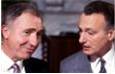
"That would be a very courageous decision, minister"
A while back I volunteered to do a talk for the SPP on The Wise Life. Well, it seemed like a good idea at the time, but, as Sir Humphrey would put it , it was a rather courageous decision.
The trouble is that as soon as you start talking about wisdom you are either going to seem unappealingly arrogant, or like Socrates, deny that you know anything about wisdom - in which case why talk about it? (The story goes that when the Oracle at Delphi proclaimed Socrates to be the wisest guy in Athens, Socrates decided that the only way this could be true was that only he, Socrates, was aware of the fact that he knew nothing).
One approach to wisdom is to look at its opposite, folly, and to try to learn from that.
When asked about their greatest
mistakes ever, here are some of the answers that famous people have
given:-
One might well chuckle at other people's misfortunes, but can we learn anything from this catalogue of folly? Well, perhaps - from Toby Young - that we need to have the wisdom of experience and knowledge of human nature. From John O'Farrell something like "Be prepared". From Alain de Botton "Don't try to please others." From Roy Hattersley "Learn what makes you happy as early as you can" From Frederick Forsyth "Think about the consequences of your actions"
But then doesn't run the risk of slipping into platitudes. A bit like at the end of Monty Python's Meaning of Life when Michael Palin finally reads out the answer to the Meaning of Life.
Have I, them made my biggest mistake in volunteering to talk about the Wise Life?
Well, I've got 4 whole days to find out the answers. And if you'd like to find out what happens, it would be great to see you there on Tuesday 19th December, at 630 pm at
Swedenborg House
David Wynter Room 2nd floor
20-21 Bloomsbury Way
London
WC1A 2TH
Nearest tube: Holborn
Entrance is free, but please e-mail me if you intend to come as, unlike at John O'Farrell's gig, numbers are limited ...
ROY HATTERSLEY "Not starting serious writing until I was 40, and spending 20 years without a dog."
ALAIN DE BOTTON "Most of my great mistakes (if only there were just one) have come from trying too hard to please other people."
FREDERICK FORSYTH "I almost started World War Three. It was 24 April 1964 ..."
JOHN O'FARRELL "My biggest mistake was thinking that the secret to being a brilliant stand-up comic was to do an entirely new and untested act in front of the biggest audience I had ever faced"
TOBY YOUNG "When I was 16, I went out on a date with this 17-year-old girl called Nicole. I'd had a crush on her for three years. At the end of the evening she invited me into her parents' house and up to her bedroom, and we started snogging. ....But in my 16-year-old wisdom...."
To see what happened to poor Toby you'll have to read the full article at The IndependentOne might well chuckle at other people's misfortunes, but can we learn anything from this catalogue of folly? Well, perhaps - from Toby Young - that we need to have the wisdom of experience and knowledge of human nature. From John O'Farrell something like "Be prepared". From Alain de Botton "Don't try to please others." From Roy Hattersley "Learn what makes you happy as early as you can" From Frederick Forsyth "Think about the consequences of your actions"
But then doesn't run the risk of slipping into platitudes. A bit like at the end of Monty Python's Meaning of Life when Michael Palin finally reads out the answer to the Meaning of Life.
'Try and be nice to people, avoid eating fat, read a good book every now and then, get some walking in, and try and live together in peace and harmony with people of all creeds and nations.'
Have I, them made my biggest mistake in volunteering to talk about the Wise Life?
Well, I've got 4 whole days to find out the answers. And if you'd like to find out what happens, it would be great to see you there on Tuesday 19th December, at 630 pm at
Swedenborg House
David Wynter Room 2nd floor
20-21 Bloomsbury Way
London
WC1A 2TH
Nearest tube: Holborn
Entrance is free, but please e-mail me if you intend to come as, unlike at John O'Farrell's gig, numbers are limited ...
New Personal Development Posts
Learn about Kierkegaard . Recommended
novel about Kierkegaard's ideas;
Read Kierkegaard
Quotes
There's a lot of new posts on the main
Personal
Development through Philosophy and Psychology
website. Here are a few recent highlights ..
Beyond Authentic Happiness - 10 reasons to doubt Seligman
Are you researching positive psychology or looking for a review of Martin Seligman's Authentic Happiness? Are you looking for a critique of Authentic Happiness? Have you read Authentic Happiness and are wondering if you are along in having some unanswered questions for Seligman? If so, read on ...
Beyond Authentic Happiness - 10 reasons to doubt Seligman
Are you researching positive psychology or looking for a review of Martin Seligman's Authentic Happiness? Are you looking for a critique of Authentic Happiness? Have you read Authentic Happiness and are wondering if you are along in having some unanswered questions for Seligman? If so, read on ...
Your choice of
counselling or psychotherapy course is crucial - it could be the difference
between making the satisfying career change or want and being disillusioned and
frusrated. I now teach some courses and also offer advice to trainee counsellors
seeking the right course. If you want to book a consultation on this topic,
e-mail me. Here for free are my top 7 tips on finding the right course for
you.
Read more about counselling and psychotherapy training
 Soren Kierkegaard
(1813-55) - The first existentialist philosopher?
Soren Kierkegaard
(1813-55) - The first existentialist philosopher?
Major works: Either/Or (1843),
Fear and Trembling
(1843), Concluding Unscientific Postscript (1846)
Learn about Kierkegaard . Recommended
novel about Kierkegaard's ideas;
Read Kierkegaard
Quotes
Best Kierkegaard and existentialism links
Read more about Kierkegaard
In the last few months I've
given 3 one-day workshops at the City Lit in London. All were interesting in
their own way.
First came Cognitive
Behaviour Therapy Introduction.
CBT (Cognitive Behavioural Therapy) is one of
the most popular and respected forms of therapy practised in the UK, probably
because it is evidence-based and can produce results in a relatively short
time. The central idea of CBT is that our emotions
are connected to our thoughts. By becoming aware of your thoughts, and
substituting realistic thoughts for unrealistic ones, you can overcome emotional
difficulties such as depression, anxiety as well as low self-esteem and
relationship issues.
Two things strike me every time I introduce CBT ideas to
someone for the first time. First, the idea that emotions and moods can be
transformed so simply is new - and very liberating to many people. Secondly, CBT
techniques - especially mood logs can make a huge difference to people's mental
well-being. "Doing CBT work every day is like going to the gym" someone told me
recently. "It gets rid of the fog from my mind" another said. You can read more
about CBT on my CBT web page
Then in November we spent a
whole day on the 7
Habits of Highly Effective Living,
inspired by the works of management guru Stephen Covey,
Covey's claim is confident
and bold. It is that he has discovered seven habits, which if learnt and
practised, will make you a highly effective person, at home and at work.
In all spheres of your life you will “replace old patterns of
self-defeating behaviour with … new habits of effectiveness, happiness and
trust-based relationships” One set of habits covers
everything.
Here are Covey's 7 Habits
:
Habit 1. Be
Proactive
Take initiative and
responsibility.
Habit 2. Begin with the
end in mind
Develop and focus on your
vision and values.
Habit 3. Put first things
first
Organise and execute
around the most important relationships and results in your
life.
Habit 4. Think
win/win
Seek mutually beneficial,
win/win agreements and solutions.
Habit 5. Seek first to
understand, then be understood
Try to feel and think
yourself into another person's shoes whilst they are talking. Only then try to
make your own viewpoint be heard.
Habit 6.
Synergise
The whole can be greater
than the sum of the parts. Compromise is 2+2=3. Synergy is 2+2=5 - or
more!
Habit 7. Sharpen the
saw
Preserve and renew
yourself - in your physical, mental, social/emotional and spiritual
dimensions.
"All very good, but all very idealistic" you may well be thinking. But did you know that Channel 4 took 2 dysfunctional British families a few years back and saw how they got on "living by the book".
How do you think families with stroppy adolescents would respond to being told to "Think win/win" and "begin with the end in mind." Yes, with cyncism and hostility.
Yet both families benefited in the end from Covey's book -mainly because of the sheer determination and honesty of both mothers in the family (Covey would call it proactivity),
In my view Covey's habits can be really helpful to everyone, but only work if applied in a really determined, habitual way.
You can read more about
the 7 habits on my 7 Habits web page
Finally in December we
spent a day looking at Existential Psychotherapy
Existential therapy draws from
seemingly obscure philosophers like Jean-Paul Sartre and Martin Heidegger. What
I attempted to demonstrate in the workshop - with the help of film clips from
Woody Allen and Monty Python - is that it is also very practical. It's partly
about becoming the author of your own life, but also about becoming more aware
of the human condition and how to respond to it. We also looked at some case
studies where the therapy has helped clients, and at more exotic topics like
phenomenology and existential dream analysis, You can find out more at my
Existential Therapy site